 Paul L.
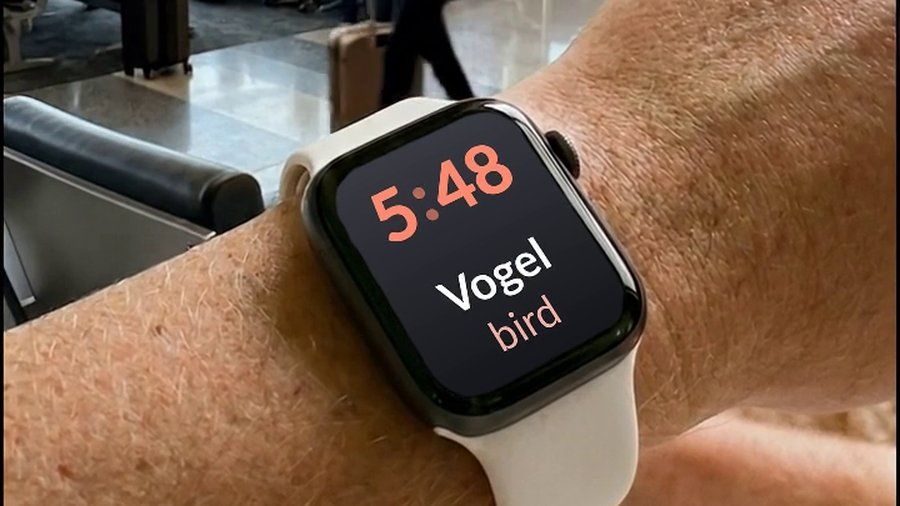
Babbel is a structured course and Watch Your Language is not a course at all. If you want lessons that teach a language from the beginning, with speaking practice, pick Babbel. If you already have a course or a class and the words keep slipping away, Watch Your Language shows them on your iPhone Lock Screen, Home Screen and Apple Watch face without a session to open. The table uses what each product says on its own site or App Store page, checked in October 2026.
| Babbel | Watch Your Language | |
|---|---|---|
| What it teaches | Courses its App Store page says are “built by 200+ language experts”, in short lessons. | Nothing on its own. No lessons, no grammar explanations. |
| Time per day | “Learn in as little as 10 minutes a day”, per its App Store page. | No session. Words appear where you already look. |
| Speaking | The App Store page lists speech recognition and Babbel Speak, described as an AI conversation partner. | Not covered. The watch app reads words aloud with text-to-speech; nothing listens to you. |
| Languages | Fourteen in its App Store listing, including Spanish, French, German, Italian, Polish, Turkish, Indonesian and Dutch. | 25+ languages. |
| Platforms | The App Store compatibility section lists iPhone, iPad and Apple Vision, with no Apple Watch app. | iPhone and Apple Watch, with widgets on iPad too. |
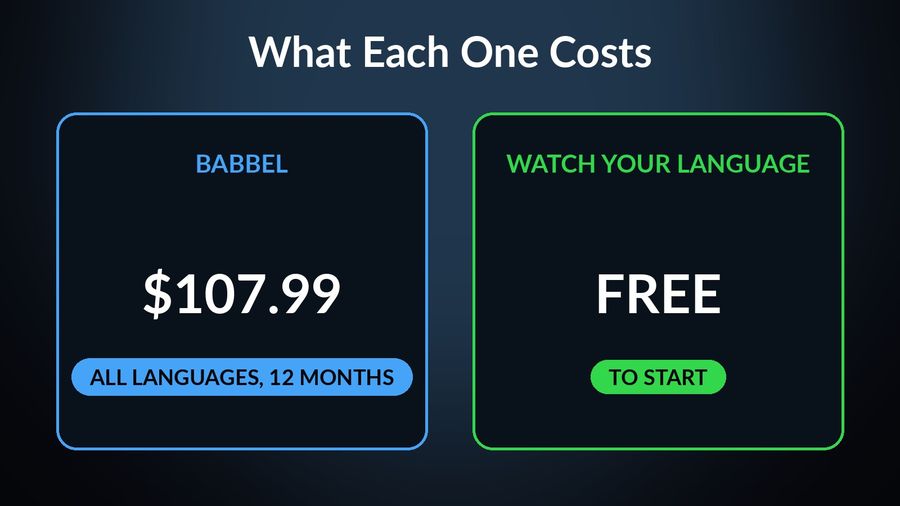
| Price | Its site says you can try the first lesson of every course for free. Its US App Store listing shows single-language plans such as one month at $17.99 and an all-languages 12-month plan at $107.99. | Free to start with pre-made word packs; a Premium subscription unlocks all packs and adding your own words. |
Key takeaways
- Verdict: Babbel is the better choice for being taught, with a structured course, speech recognition and an AI conversation partner; Watch Your Language has no lessons.
- Babbel needs about ten minutes of sitting down and lists no Apple Watch app; Watch Your Language puts words on your Lock Screen and watch face all day.
- Use both: Babbel for lessons, then type or import the words you missed so they return on your Lock Screen and watch face.
Where Babbel does more
This is not a close comparison on teaching, and Babbel wins it.
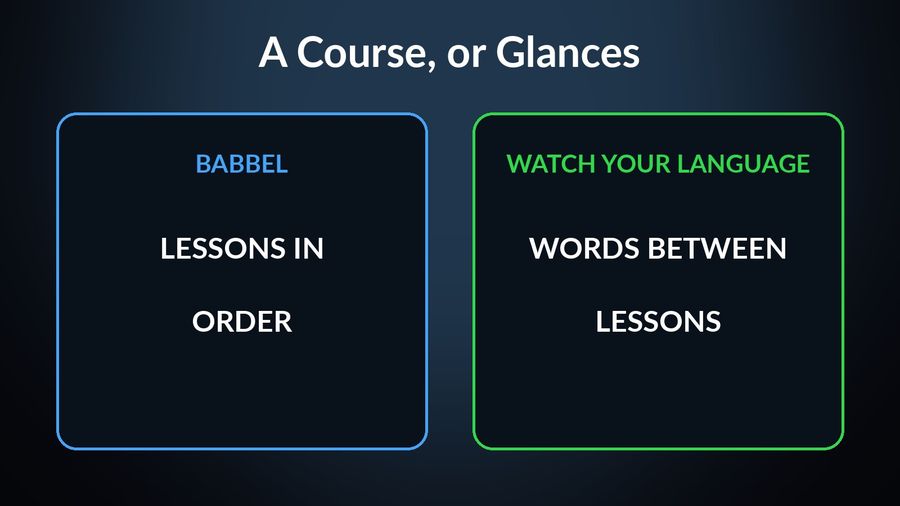
- A course to follow. Lessons built by people who teach languages, in an order, with you led from one to the next. Watch Your Language has no course, no path and no grammar.
- Speaking practice. Speech recognition and an AI conversation partner give you something to say aloud and a reply. Watch Your Language has nothing that listens.
- Lessons that start from your language. The listing says the courses are “tailored to your native language”. Watch Your Language shows a word and its translation and leaves the rest to you.
- More platforms. Babbel is on iPhone, iPad and Apple Vision, where Watch Your Language is iPhone and Apple Watch only.
Where Watch Your Language does more
Babbel needs you to open it, and its App Store listing shows no Apple Watch app. A ten-minute lesson is a good habit and a bad fit for a day with no spare ten minutes.
- Between lessons. Words appear on the iPhone Lock Screen and Home Screen, on iPad widgets, and as Apple Watch complications in inline, rectangular, circular and corner shapes.
- Words you choose. Babbel's lessons decide the vocabulary. With Premium, Watch Your Language can show any list: type words in, import a CSV, Excel or Google Sheets file, or scan handwritten notes.
- The forgotten ones, more often. Words you keep getting wrong return sooner, and you choose how often a word changes, from every minute to once a week.
- More languages. It covers 28, against fourteen in Babbel's listing.
Which one to pick
Pick Babbel if…
- You want a structured course that takes you from the beginning, with lessons you complete in order.
- You want to practise speaking and pronunciation in the same app.
- You can set aside around ten minutes a day to sit with it.
Pick Watch Your Language if…
- You already study somewhere, and the vocabulary fades between sessions. Stopping new words from fading covers why.
- You want vocabulary spread through the day on your wrist.
- You are learning a language that Babbel does not list.
Using both together
The honest combination is Babbel for the lessons and Watch Your Language for what the lessons leave behind. After a lesson, type in the words you missed or import a list, and they come back on your Lock Screen and watch face a few at a time. Glancing builds recognition, not speech or grammar, so it supports the course rather than replacing it. Duolingo vs Babbel compares the two course apps, and Watch Your Language vs Duolingo shows where this app sits next to the other one.
Watch Your Language has no lessons, no grammar and no speaking practice, and Babbel is the better choice for anyone who wants to be taught. What the app adds is the part a ten-minute lesson cannot: vocabulary that stays in view all day, a few words at a time on your iPhone Lock Screen, Home Screen and Apple Watch face, with the ones you keep forgetting shown more often. It is free to start with pre-made packs, and Premium unlocks the rest, including your own words.