 Paul L.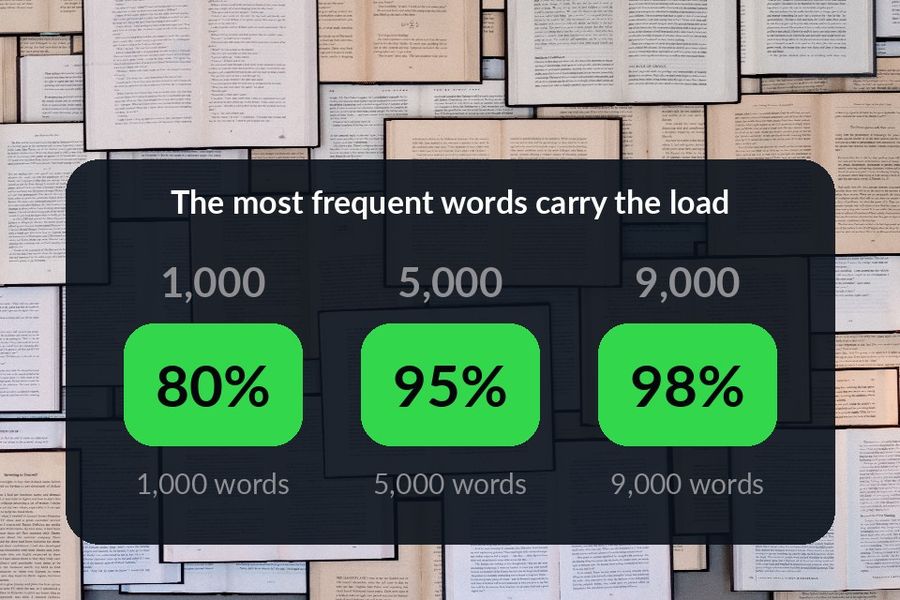
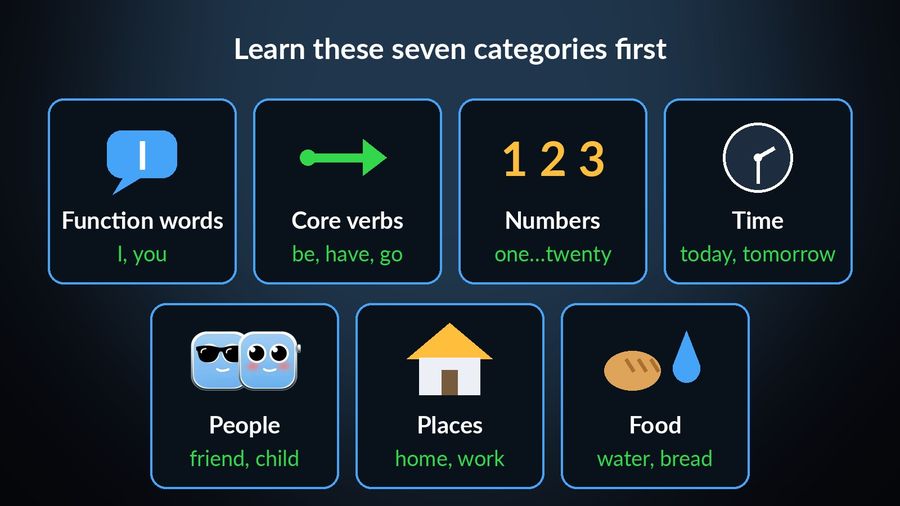
The quick answer: start with the small set of words that show up in almost every sentence, in any language — pronouns and other function words, a dozen or so core verbs, numbers, basic time words, the words for people, the everyday places you go, and food. These carry an outsized share of everyday speech and writing, well before you reach the specialised vocabulary of your job, your hobbies or the topics you actually want to talk about.
Key takeaways
- Start with words found in nearly every sentence: function words, a dozen core verbs, numbers, time words, people, places and food.
- A 2022 lecture-video study found the 1,000 most frequent English words covered about 80% of speech, 5,000 about 95%, and about 9,000 reached 98%.
- Check your level first, review little and often, then move to words from your own life, where a general frequency list stops helping.
Why frequency matters
Word frequency follows a similar shape from one language to the next: a small core of words reappears constantly, and the further down the list you go, the rarer each additional word becomes. Learning the most common words first gets you more usable language per hour than working through a dictionary alphabetically or memorising a long themed list at random. A 2022 corpus study of English-language university lecture videos put numbers on that curve: the 1,000 most frequent words already covered about 80 percent of the words spoken, the 5,000 most frequent covered roughly 95 percent, and reaching what the researchers judged "adequate" comprehension — 98 percent coverage — took around 9,000 words (Xodabande, Ebrahimi and Karimpour, 2022). Other languages and other kinds of text will not match those exact figures, but the shape of the curve is the same: the first few hundred words do most of the early work, and each further stretch buys you less than the one before it. Frequency is a different question from how much vocabulary adds up to fluency — see how many words it takes to be fluent for that one.
The categories to start with
Before any themed vocabulary — travel, business, a hobby — a handful of categories cover the load-bearing parts of almost every sentence.
Function words
Pronouns (I, you, this, that), prepositions (in, on, with, for), conjunctions (and, but, because) and articles or their equivalent. They rarely make it onto a "top vocabulary" list because they are not exciting, but a sentence falls apart without them.
Core verbs
Be, have, go, want, need, make, know, see, say, give, take, and their close relatives. A dozen or so verbs, conjugated correctly, let you build a surprising number of sentences before you own a single noun from a specialised topic.
Numbers
One through twenty at minimum, then tens and hundreds. Numbers appear in prices, times, addresses, ages and quantities from the first day you use the language, not eventually.
Time
Today, tomorrow, yesterday, now, later, the days of the week, and a way to tell the time. Almost every plan, appointment or story needs one of these.
People
Family terms, common titles, and the words for man, woman, child, friend. You will refer to people constantly, and introduce yourself, before you do almost anything else.
Places
Home, work, station, shop, street, city, country — the everyday locations a sentence needs before it needs a specific address.
Food
Water, bread, coffee, a handful of basic dishes, and the words needed to order or ask for something to eat. Food vocabulary earns its early place because it is one of the first things a traveller or a new arrival actually has to say out loud.
A reasonable starter list, drawn roughly evenly across these seven categories, ends up a few hundred words long — small enough to work through in a matter of weeks, and large enough to carry a real conversation about the present, the near future, and the people and places around you. It will not be a complete vocabulary, and it is not meant to be: it is the scaffolding everything else attaches to.
A practical way to learn them
- Start from a genuine frequency list or a themed "essential words" pack for your language rather than guessing — a proper one is built from real usage counts, not intuition.
- Work through the categories above roughly in that order: function words and core verbs first, since they appear inside almost every other sentence you will ever build.
- Check where you already stand before you start: a short vocabulary level test shows which of the common words you already know, so you are not re-learning them.
- Review little and often rather than in one long sitting. A short list revisited daily beats a long list crammed once — see how spaced repetition decides when to bring a word back.
- Once the core is solid, move on to the vocabulary specific to your own life: your job, your hobbies, the place you are visiting. This is also where a general frequency list stops being much help — the words you personally need next rarely rank near the top of anyone else's list, so from here on the most useful source is your own notes, conversations and reading, not a published ranking.
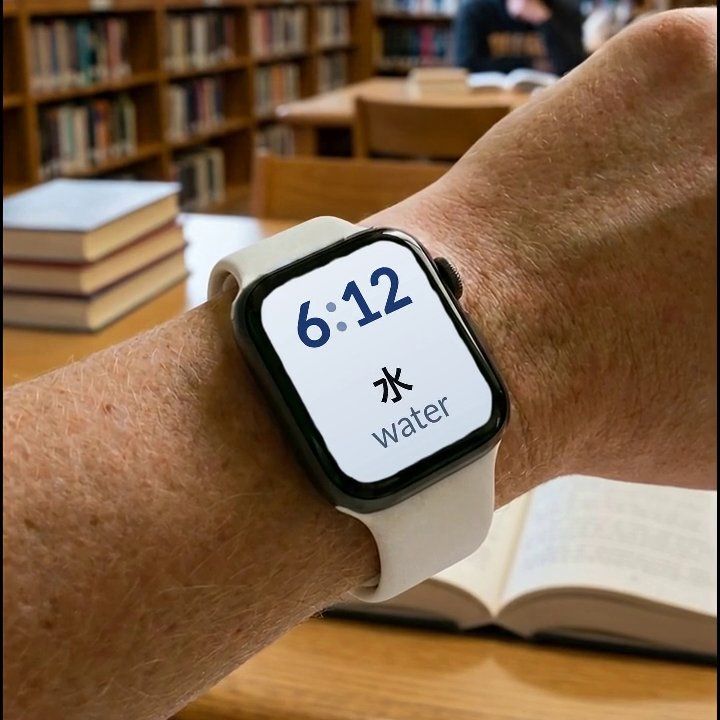

Watch Your Language keeps the words you choose to learn — including a frequency-based starter list like this one — in front of you on your iPhone Lock Screen and Home Screen widgets and your Apple Watch face, and decides which one to show you next from the ones you keep forgetting. Type your own list in, import it from a CSV, Excel or Google Sheets file, or scan handwritten notes with the camera, and the app takes care of bringing each word back until it sticks.
Word lists for common languages
If you already know which language you are starting, a ready-made beginner word list is the fastest way past this stage. These are free word lists sorted by topic, from Watch Your Language's own site:
Do not see your language above — most of Watch Your Language's 28 learning languages still work the same way: start with the categories in this article, then let the app take over deciding what comes back and when.