 Eleanora R.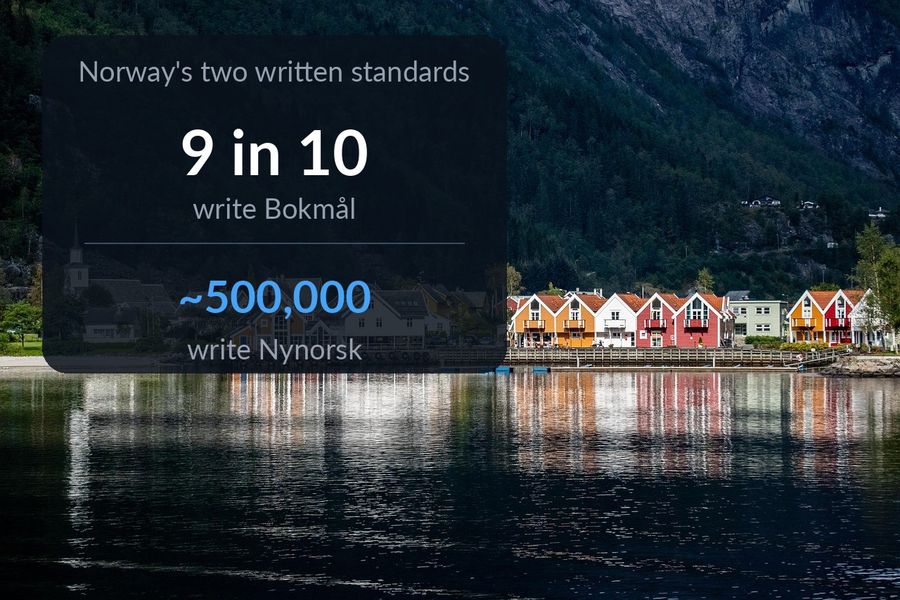
Norwegian has two official written standards, Bokmål and Nynorsk, and a learner meets this fact almost immediately: a course, a dictionary or a word list has to pick one. Watch Your Language's Norwegian word list is written in Bokmål — hvor, hjem, kirke, uke, melk, kjærlighet — which is also the form used by roughly nine out of ten people who write Norwegian, according to the Store norske leksikon entry on bokmål. Nynorsk is not a dialect or a simplified version of Bokmål; it is a separate, fully official written standard with its own spelling and its own grammar, used by a smaller but real share of the country.
Key takeaways
- Norwegian has two official written standards, and Bokmål is used by roughly nine in ten writers; Nynorsk is a separate standard, not a dialect.
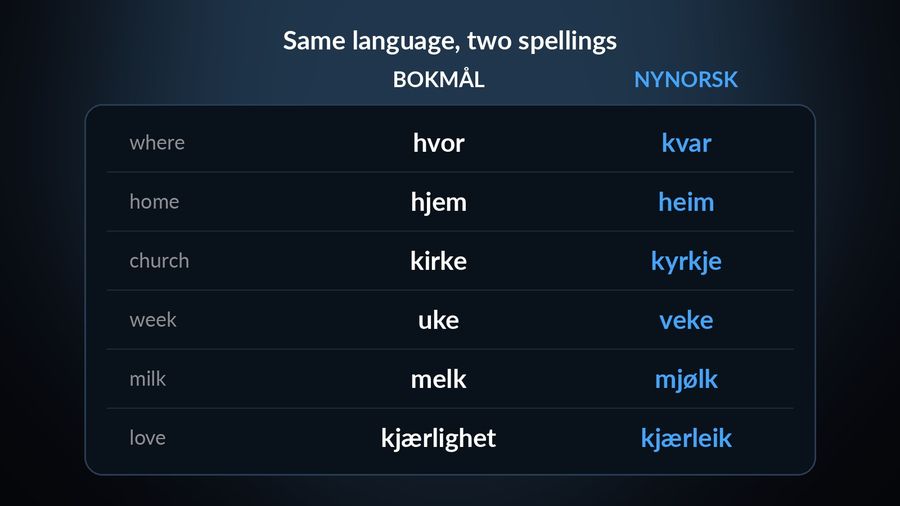
- They differ in spelling, not in grammar difficulty: hvor/kvar, hjem/heim, kirke/kyrkje, uke/veke, melk/mjølk, å gjøre/å gjere.
- The app's Norwegian words are Bokmål; if you need Nynorsk, add those words yourself by typing, scanning or importing.
Two written standards, one spoken language
Norwegian speech varies enormously from town to town, and almost no one speaks "pure" Bokmål or "pure" Nynorsk out loud — spoken dialect and written standard are two separate questions. Bokmål grew out of Danish, the administrative language of the union between Denmark and Norway from 1537 to 1814. After independence, reformers led by Knud Knudsen gradually Norwegianized the spelling and grammar over the following century, a process Store norske leksikon traces from the 1862 spelling reform onward. Nynorsk took the opposite route: the linguist Ivar Aasen spent the 1840s touring rural Norway, collecting spoken dialects, and built a new written standard directly from them rather than from Danish, a history set out in the Store norske leksikon entry on nynorsk. Both standards have had equal legal status since the early twentieth century.
Where each one is actually used
Bokmål dominates by a wide margin: Store norske leksikon puts it at about 90 percent of people who write Norwegian, and Språkrådet, the government's own language council, gives the same figure, putting the number of Nynorsk writers at roughly 500,000 people. Nynorsk is strongest along Norway's west coast, though the balance has been shifting toward Bokmål for decades: Store norske leksikon reports that 11.6 percent of primary school pupils had Nynorsk as their main written form in 2021, down from 14.8 percent in 2001. Which one a school uses is not decided nationally — under Språkrådet's own explanation, individual municipal councils and county assemblies pass the resolutions that set the official written form for public bodies and schools in their area. Whichever form a pupil is not taught as their main one, they still learn it as a required subject — Språkrådet describes it plainly: "Each pupil has one of the written forms as their main form and the other as their secondary form," called sidemål.
Where the words themselves differ
Much of everyday vocabulary is identical or close enough to guess — hus (house), bok (book) and vann (water) are the same in both. Where the two standards diverge, a few patterns repeat often enough to recognize on sight: Bokmål's ø often becomes Nynorsk's y or øy, and several common words simply took different paths from Old Norse.
| English | Bokmål | Nynorsk |
|---|---|---|
| where | hvor | kvar |
| home | hjem | heim |
| church | kirke | kyrkje |
| week | uke | veke |
| milk | melk | mjølk |
| love | kjærlighet | kjærleik |
| much | mye | mykje |
| to do | å gjøre | å gjere |
None of this makes Nynorsk harder to learn than Bokmål in any absolute sense — it has its own regular grammar, not a looser or more "authentic" version of the other. It does mean that a learner who has only studied Bokmål vocabulary will hit a wall of unfamiliar spellings the first time they read a Nynorsk newspaper, a west-coast municipal website, or a novel by an author who writes in Nynorsk.
What Watch Your Language teaches
To be direct about it: the Norwegian in this app's word packs is Bokmål, not Nynorsk. That was not an arbitrary choice — it matches what the large majority of Norwegian writing, from newspapers to street signs to most language courses aimed at foreigners, actually uses. A word like hjem or melk is what shows up on your iPhone Lock Screen, Home Screen widgets, and Apple Watch face by default, brought back more often while it is still unfamiliar. The app does not currently offer a Nynorsk word set.
If a sidemål exam, a job in Bergen or Ålesund, or personal preference means you specifically need Nynorsk vocabulary, you are not limited to the built-in packs: you can add your own words, typed in, scanned from handwritten notes with the camera, or imported from a CSV, Excel or Google Sheets list, and each one is scheduled for review exactly like the built-in Bokmål vocabulary.
A reasonable starting point
- If you are learning Norwegian as a foreign language with no strong reason to prefer Nynorsk, Bokmål is the standard nearly every course, app and piece of everyday writing will hand you, and it is where this app's word packs already are.
- If you know you will need Nynorsk specifically — study, work, or a move to a Nynorsk-majority municipality — keep a running list of the words that differ, starting with the highest-frequency ones, rather than trying to relearn the whole vocabulary at once.
- Either way, the grammar and the great majority of vocabulary carry over between the two, so time spent on one is not time wasted for the other.
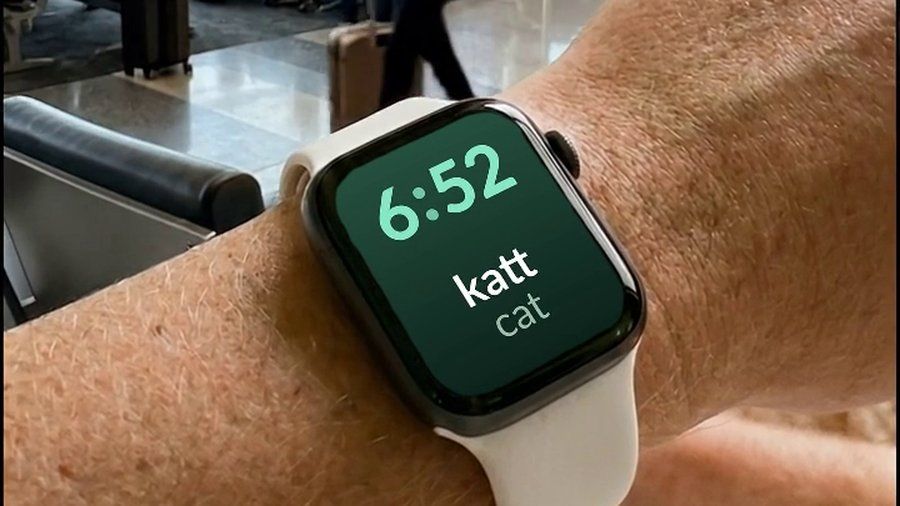

Watch Your Language teaches Bokmål in its Norwegian word list — hvor, hjem, kirke, uke, melk, kjærlighet — the standard used by roughly nine in ten people who write Norwegian. If you specifically need Nynorsk, for a sidemål exam or life on the west coast, add those words yourself, typed in, scanned from your notes, or imported from a list, and they are scheduled alongside everything else with no separate pack required.
For a sense of how much vocabulary a first working level of Norwegian actually takes, see how long it takes to learn Norwegian. To check where your own Bokmål vocabulary stands, try the Norwegian vocabulary test. And if you are weighing a similar question for a neighboring Scandinavian language, Swedish vocabulary close to English covers where Swedish and English overlap and where false friends trip learners up.